
Taulliraju Trip Report | July 2026
- News
- Our Team & Partners
- Stories
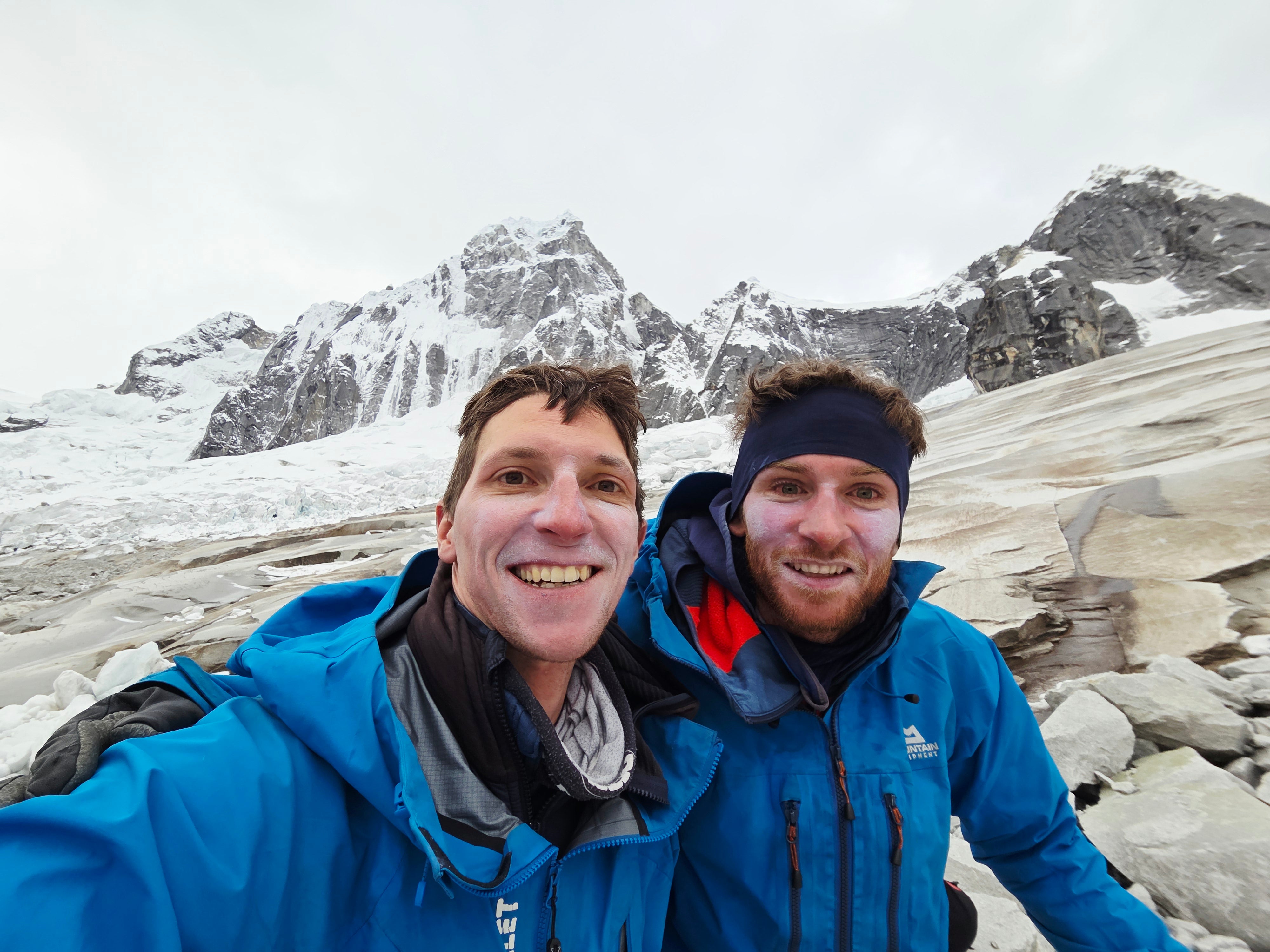
In early July this year, Adam Kaniak and Wadim Jabłoński set out to climb Taulliraju (5830m) in the Cordillera Blanca, Peru. The four-day expedition saw the pair most likely make the fifth ascent of the Italian Route on the south face, graded ED2, M6, A1, AI5, 100°.
A few months after last year’s successful expedition to Pakistan, once all the emotions had settled and the desire to experience another great mountain adventure had returned, Wadim Jabłoński and I started making plans for this year. We began looking in the opposite direction and further south, specifically towards the Peruvian Andes and the Cordillera Blanca.
It seemed that the Cordillera Blanca ticked all the boxes for what we wanted from this year’s expedition. Peru has very good infrastructure compared to the Karakoram or Himalayas, and instead of long treks with a caravan of porters, many places can be reached by local buses or even taxis, including destinations at considerable altitude. Also, instead of a base camp, you have the comforts of a civilized life in Huaraz, the starting point for everyone who comes to the region’s mountains, whether for climbing or trekking.

After our first week of acclimatization and our first unsuccessful mini-expedition to 5,721-metre Cayesh, we began focusing on the main objective of our trip.
I had been aware of the majestic 5,830-metre Taulliraju for quite some time, but I had never looked into it in any detail. It was only when Wadim and I started figuring out what we actually wanted to climb that we both became fascinated by this granite pyramid streaked with threads of ice.
Taulliraju is said to be one of the most technically demanding mountains in the entire Andes. We didn’t need to hear much more. That is exactly the kind of thing that motivates people like us. And when difficulty is combined with an aesthetic appearance like Taulliraju undoubtedly has, it stops being a sport for me and becomes something more.
We chose not to attempt a new route, but instead to climb the Italian Route, which follows a massive pillar on the left side of the south face. There are harder routes on the face, but we decided that this line appealed to us the most and could ideally match our abilities.

Getting to Taulliraju involved roughly a six-hour journey by local buses from Huaraz to the village of Vaquería, on the opposite side of the massif. In Vaquería, we met our muleteer, Emiliano, and his donkey, Francesco, whom we had arranged to help us carry our gear. We were very happy to have the help of a donkey, as it meant we could take a little more food and gas without completely exhausting ourselves.

We split the 26-kilometre approach into two relaxed days and established camp at around 4,400 metres beside the beautiful Morococha lake. From there, it was only another three to four hours to the base of the wall.
We spent the next two days in camp working out our strategy for the climb, sorting our gear and drying our completely soaked clothes after it rained all night following our arrival. Our single-wall attack tent simply couldn’t cope with it.

Day 1
On the day of the push, we left camp shortly before 3am. After crossing a glacier that was unpleasant in places, we reached the base of our route just as the first light appeared.
The first section of the Italian Route follows a huge, roughly 400-metre corner, where, if you are lucky, you will find a thread of ice that provides the entry ticket into the wall. After studying the face, we believed that there was enough ice in this section for it to be worth attempting the route.
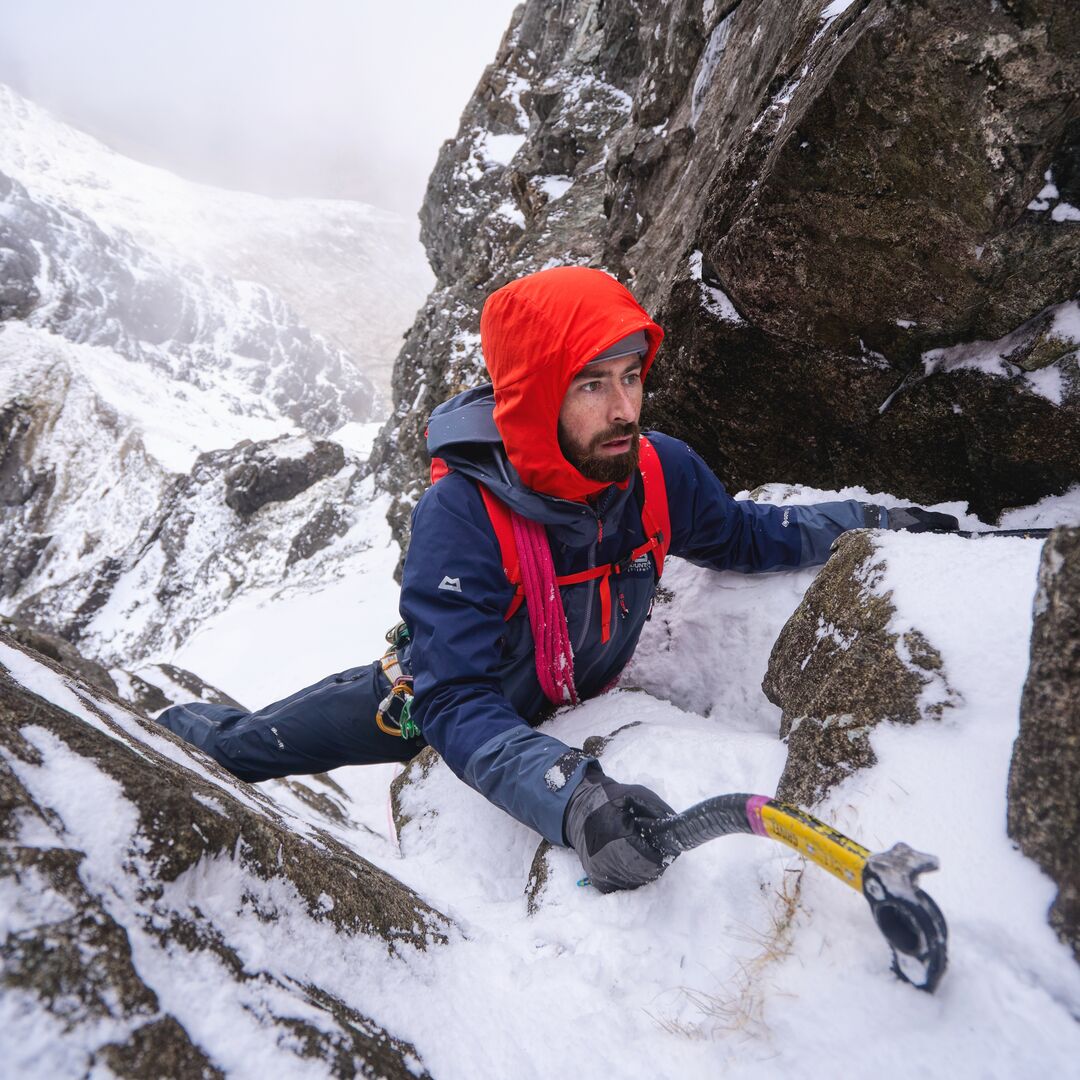
The very first metres put huge smiles on our faces. We encountered phenomenal, steep névé and thin ice. The ice was just thick enough to climb and occasionally accept some protection. The first roughly ten pitches were truly spectacular - similar in quality and difficulty in many ways to legendary routes such as Beyond the Good and Evil in Chamonix.
 |
 |
But as is usually the case on big alpine walls, such conditions very rarely last from the base all the way to the summit. The higher we climbed, the more the ice and névé disappeared, replaced in places by very unpleasant snow and snow-covered rock.
By the afternoon, we had left the big dihedral behind us and another section of the route awaited. This was predominantly a snowy pillar covered in snow cornices.
The snow formations that develop in the mountains of South America are unique, and their difficulty can hardly be quantified or described with a number, because the real challenge is mainly psychological. We pulled a shovel and three snow pickets out of our packs. We had suspected in advance that we might need them, but as it turned out, they were absolutely indispensable.
It is difficult to describe the level of mental effort required to climb terrain like this. And at that point, we still had no idea that this would be the character of the next three days, all the way to the summit.
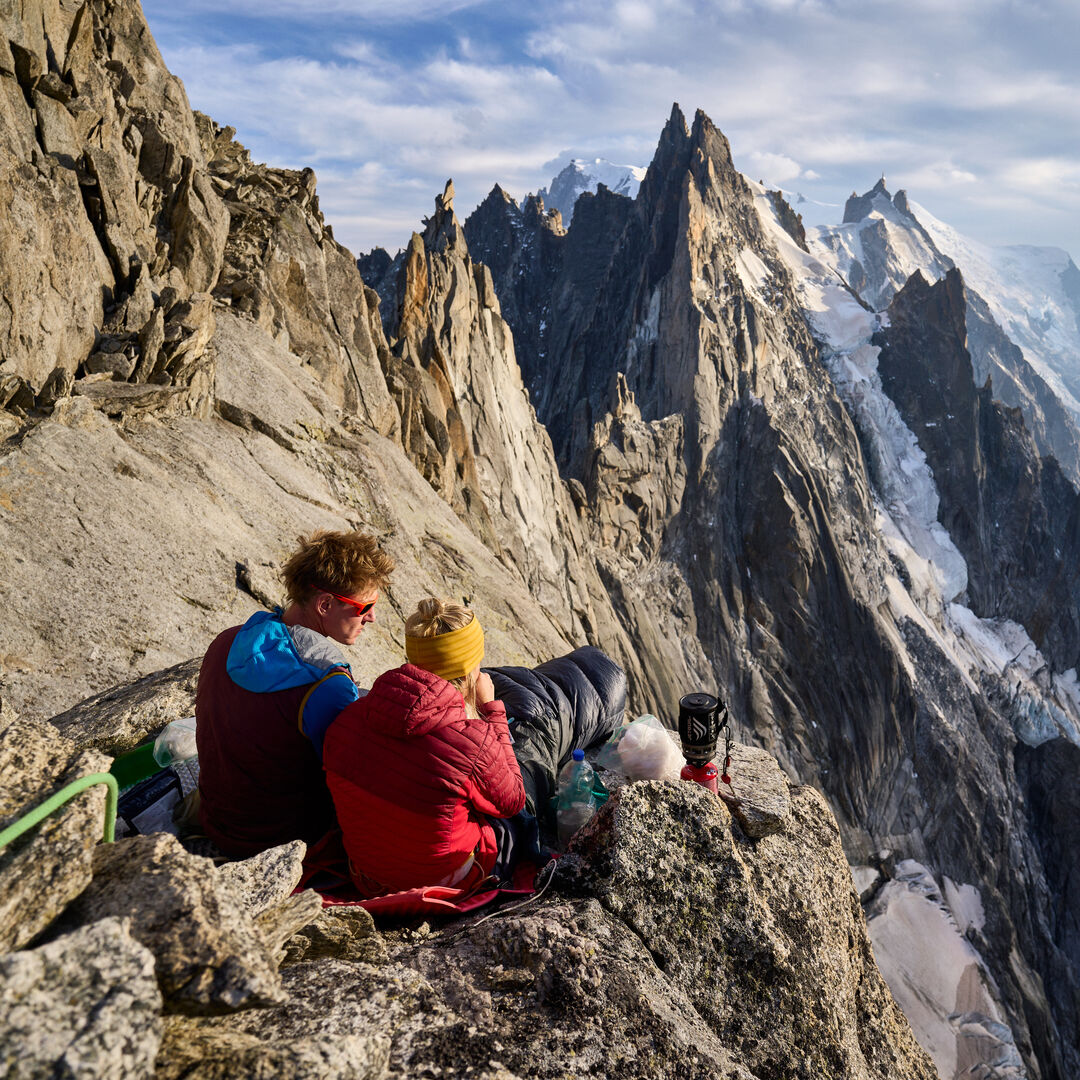
Our first day ended up becoming very long because until 10pm we were unable to find a suitable bivouac site among the maze of snow gullies and cornices. Late in the evening, our luck finally turned. We dug out a reasonably good ledge on one of the cornices and managed to pitch our tent in probably the craziest place I have ever had the chance to bivouac.
Day 2
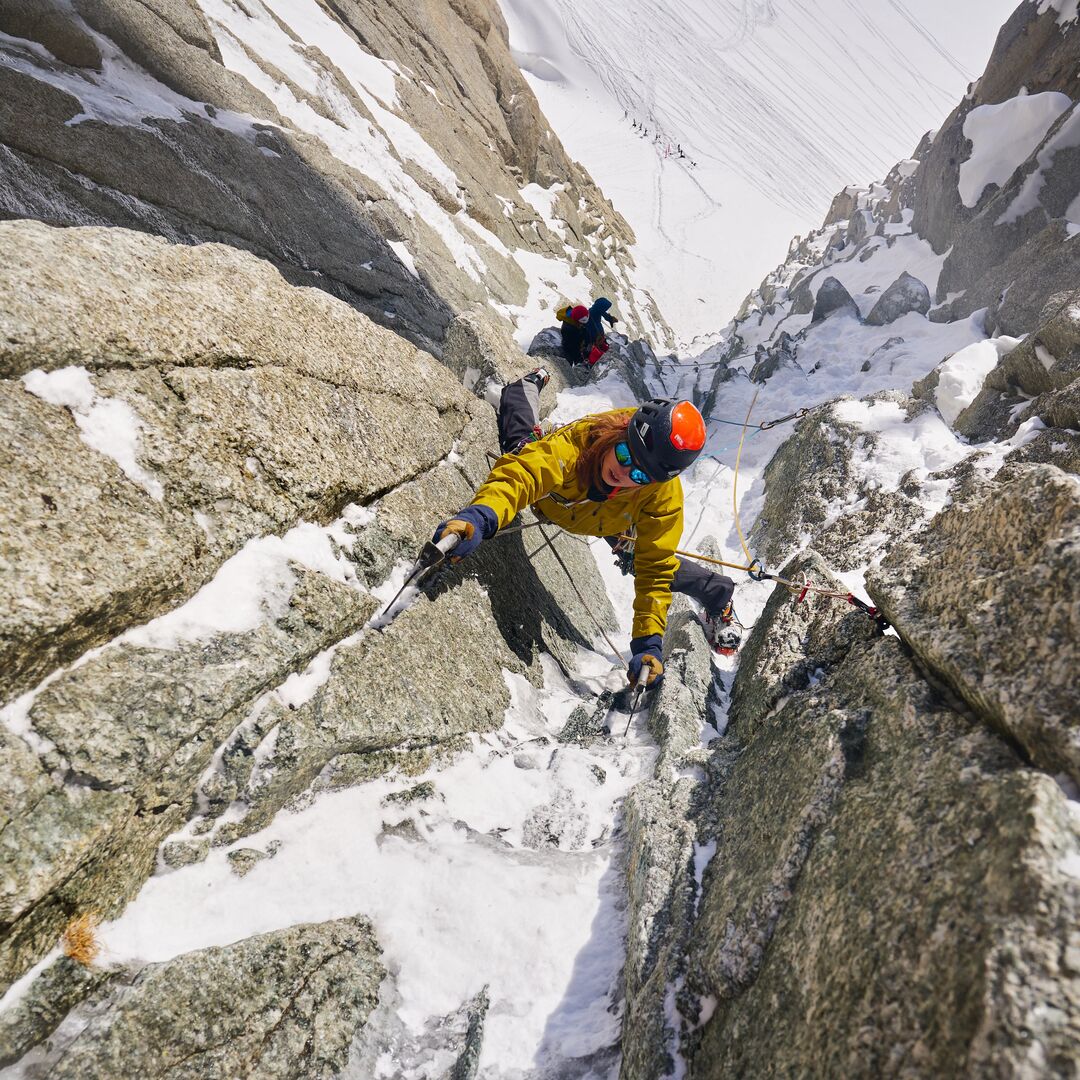
The next morning, we took our time and woke up with the first light. Approximately 450 metres of climbing remained before the top of the wall. Although the terrain appeared easier, its character made it absolutely impossible to climb simultaneously, so we had to climb everything pitch by pitch.
We were lucky that even in sections where protection was extremely difficult to place, we occasionally managed to drill an ice screw or find something to place in the rock, so our belays were generally good.

On the second day, however, we began to realize that even if we wanted to retreat, the terrain below us was no longer rappelable. With that realization came a strange sense of calm. Your mind understands that there is only one option, and that option leads upwards.
At around 5pm, we reached the top of the wall. On the final roughly eight metres to the ridge, I had to aid my way up on snow pickets through overhanging snow because my ice axes were completely useless.
From the ridge, we descended a few metres onto the opposite, north side and managed to dig out a good bivouac ledge. We had the tent up before dark.

Day 3
The previous three ascents of this route had ended on the third day, with a bivouac somewhere on the descent, so we woke up on the third day full of energy. After all, we only had the snowy ridge ahead of us and the summit was practically within touching distance.
We could not have been more wrong.
I had heard and read several times that in these mountains, the ridges are often the hardest part of the entire climb. You climb a wall and naively think that you have made it. After all, that is how it works on most mountains.
Well, not in this case.
 |
 |
Our ridge was without a doubt the crux of the entire route. It wasn’t technically difficult climbing, but Wadim and I had to use pretty much every trick we had learned so far. Even though we had to dig very deep mentally, throughout the day we still somehow believed that we might be standing on the summit by the end of the third day.
That hope disappeared only during the final two pitches of the day. Both Wadim and I spent at least an hour leading each of them, and they added more than a few grey hairs to our heads. We realized that a third bivouac was unavoidable.
Miraculously, we managed to find a suitable place beneath an ice overhang. With the help of our shovel, we turned it into a nice, comfortable ledge.

Day 4
On the fourth day, only about three pitches separated us from the summit. Surprisingly, they went relatively smoothly, and at around 9am, one after the other, we cautiously climbed onto the pointed summit cornice.
It was a pretty emotional moment. Maybe we even shed a tear, but I honestly can't remember.

 |
 |
Before we could fully appreciate what we had accomplished, however, we first had to get down. Nine hundred metres of steep, technical terrain separated us from solid ground.
I led the entire descent, which consisted mainly of rappelling with very little walking terrain. Fortunately, in the fog I managed to find the correct descent line, and after roughly nine hours we finally reached the glacier below the face.
We had calculated it almost perfectly. Not a single piton, not a single nut were left on my harness. If the mountain had been another fifty metres higher, we would have had to leave some cams behind. Fortunately, we managed to avoid that.
For both Wadim and me, Taulliraju is one of our biggest and most intense mountain adventures, and certainly one we will not forget anytime soon.

Words by Adam Kaniak